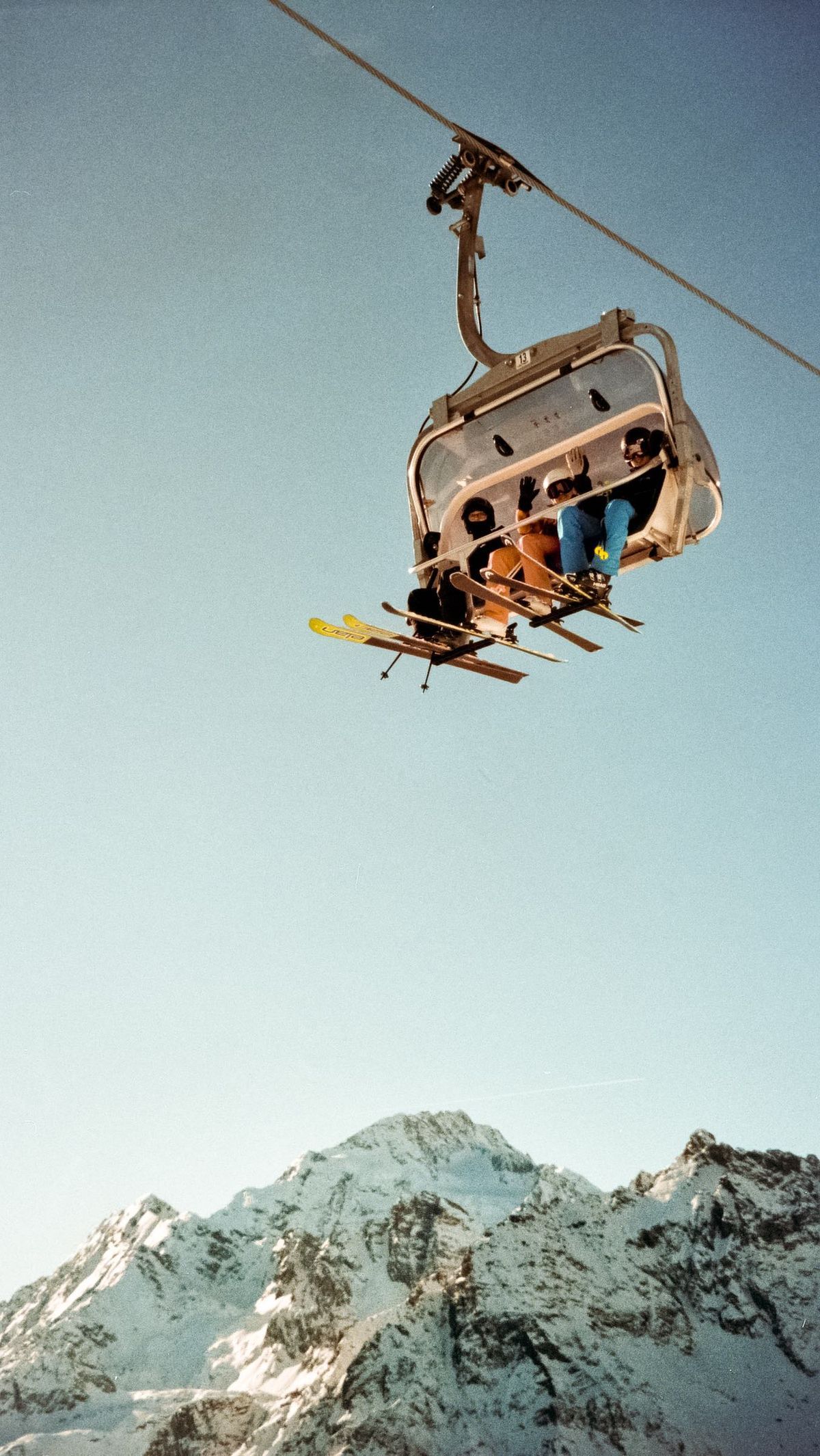
The chair slows at the loading point. Skis slide forward; the bar comes down; the slope drops behind. A run has ended, and the next one can wait a few minutes. From the lift, the mountain is briefly a landscape rather than a task.
That pause comes with rules. The National Ski Areas Association asks riders to know how to load, ride and unload, and to seek an attendant's help when needed. The view is best enjoyed after the practical sequence is understood.
Between runs
A ski day has sounds between descents: a binding clicks, a boot scrapes, a conversation resumes as the chair rises. Someone points to a line taken earlier; someone else studies the weather. For a few minutes there is no turn to complete.
From the lift, it is easier to see how a slope fits into the larger mountain. Trees divide one line from another; weather changes the view; other people move at different speeds. The pause can sharpen the next decision without turning the whole experience into a calculation.
The lift has a sequence
The lift is a transition, and transitions have their own discipline. Equipment must be gathered, loose items secured and attention given to the loading point. The National Ski Areas Association advises riders to know how to load, ride and unload safely and to ask an attendant for help when needed. The familiar ease of a chair moving uphill depends on people understanding the sequence. The practical action comes before the view.
Once aboard, the body becomes still while the landscape passes. A route that felt steep underfoot may appear gentler from above; another may reveal a turn hidden from the bottom. The view can inform a decision, but it is also simply different. It allows the skier to leave one run behind before deciding what the next requires. This pause is part of the sport's rhythm, not a blank between more important moments.
For a skier based in Singapore, snow is encountered through travel rather than a change of local season. That can heighten the wish to make every run count. The lift offers a counterweight: time to read the mountain, respect conditions and enjoy being somewhere unlike home without treating the journey as a test of how much can be fitted into it. The ascent has a value of its own.
Looking from above
Snow changes during a day, as do visibility and the number of people on a slope. The lift may reveal these changes, though it cannot replace signs, local guidance and judgment on the ground. A beautiful descent seen from above may not be the right choice for every skier at every hour. The capacity to enjoy a mountain includes knowing when another line would be more suitable.
This attention extends to other people. The slope is shared even when a photograph makes it look empty. The NSAA's responsibility code asks skiers and riders to remain in control, heed signs and give way appropriately. Such rules sound prosaic beside a wide alpine view. They are part of what allows many people to experience that view in the same place, with different levels of confidence and ability.
A day on snow includes waiting, fastening, resting and sometimes deciding to stop. A companion may point out a ridge; someone else may say nothing. The lift's gift is repetition with variation: the route may stay the same while the light and company change.
The same lift can feel different in morning and afternoon. At first the route ahead is unfamiliar. Later, a bend or ridge has become recognisable, and the view carries the memory of where the day has already gone.
The bar lifts at the top and attention returns to the snow underfoot. The ride has given the skier a view, a pause and perhaps a better decision about the next descent. That is enough to make the interval part of the day, not merely the way back up.
Further reading: National Ski Areas Association lift safety guidance; Meteorological Service Singapore on the local climate; National Ski Areas Association responsibility code