The dog stops where the person meant to keep walking. A patch of ground has acquired a scent worth investigating. The route can wait for a moment. Shared routines are full of these small negotiations between two very different kinds of attention.
The ASPCA includes sniffing, playing and exploring among forms of canine enrichment. A walk has value to the dog beyond the distance covered. That fact changes what a good outing looks like, especially when the weather and the animal's comfort set the limits.
The walk belongs to both
A lead, harness or resting place enters the dog's day before it enters anyone's picture of that day. Fit and ease of use matter. The right choice begins with the animal who will wear or occupy it, then with the human who will manage it. A beautiful object that makes either one uncomfortable has missed its purpose.
The ASPCA describes enrichment as allowing dogs to engage in behaviours such as sniffing, playing and exploring. Giving an animal time to investigate its surroundings may be part of what makes the outing worthwhile for it.
Look at the dog, not the photograph
A photograph can preserve a lively moment, but it cannot tell us what a dog prefers throughout the day. It cannot show whether the animal is comfortable with the pace of a walk, the fit of a harness or the company nearby. Those judgments require observation over time. The image is a reminder of an individual, not a substitute for knowing one. This matters when attractive objects for animals are chosen: a pleasing lead, bowl or bed may still be poorly suited to its user.
Size, comfort, ease of cleaning and the dog's behaviour in use are better guides than appearance alone. The best-looking object may be the one that disappears into a routine because it works without making either companion struggle. This is a quieter standard than novelty. It takes account of the animal's actual body and habits, which will not necessarily resemble the imagined life shown in a catalogue or social image.
Singapore gives that attention a local setting. NParks identifies public places where dogs may visit and asks owners to supervise them and respect other users. The weather also matters. AVS guidance treats protection from excessive heat as a welfare concern for some dogs. A thoughtful walk begins with the individual animal and the conditions outside, rather than a picturesque route chosen because it will make a photograph.
Time to investigate
Dogs experience a route through scent and sound as well as sight. The ASPCA's guidance on enrichment emphasises opportunities to sniff, play and explore. That does not mean every outing must be long or elaborate. A familiar walk can offer interest when the dog has some time to investigate, within the limits of the place and its safety. The aim is not to turn every pause into an exercise, but to allow the animal's attention to matter.
The human's plan and the dog's interests do not always coincide. One wants to reach a destination; the other is absorbed by a patch of ground. Sharing a routine involves negotiating that difference. It can make the walk slower and more attentive. The owner begins to notice where the animal pauses, what it avoids and what seems to make the day easier for it. These observations are small, but they accumulate into a better understanding of the companion alongside us.
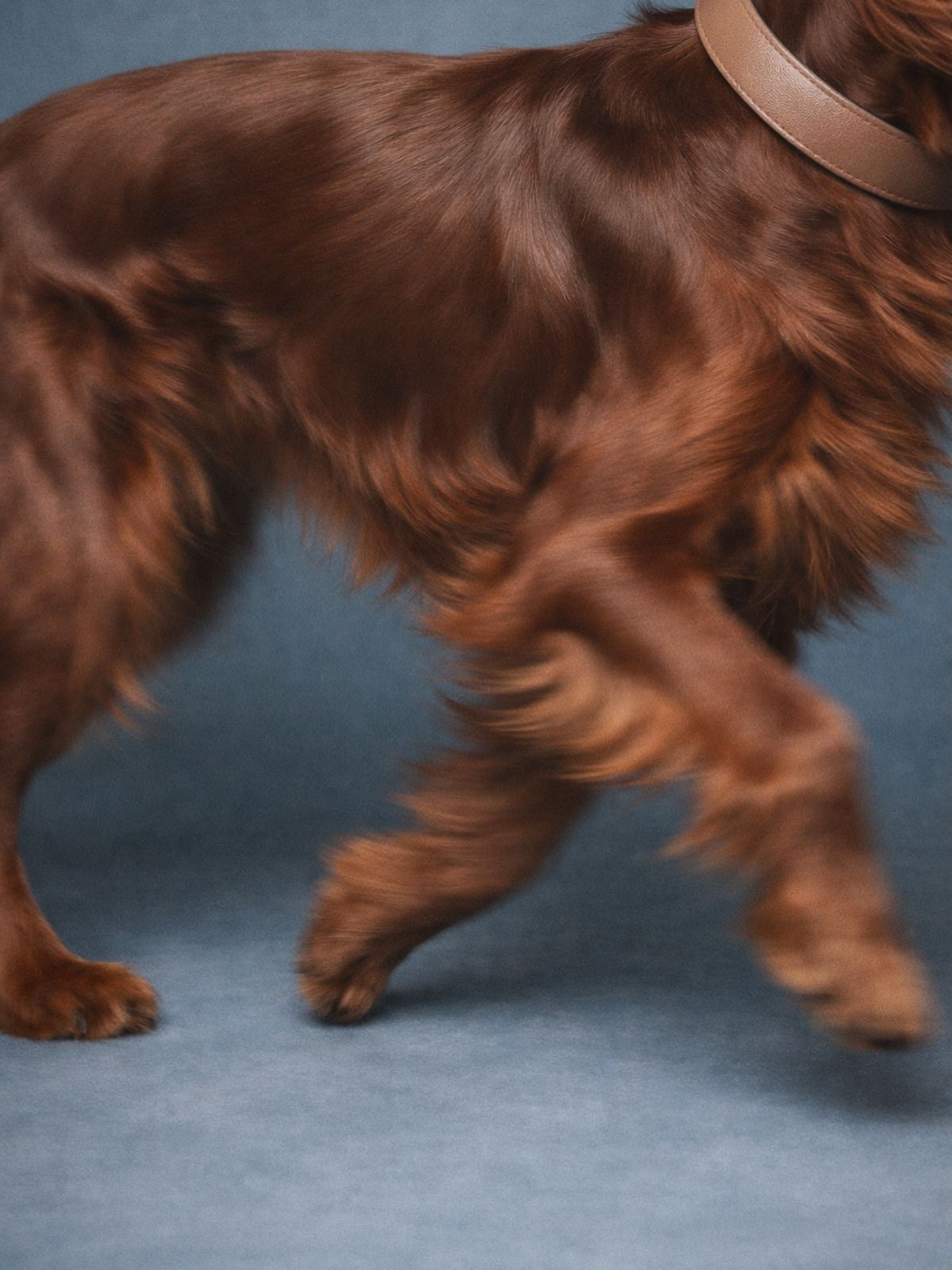
Images can preserve the shape of an ear or the blur of a paw, but their force often comes from what the owner knows beyond the frame. The photograph recalls the sound of a particular step, an eagerness at a door or the patience required on a slow day.
A photograph may keep the blur of a paw. The relationship lives elsewhere too: in a shorter walk when the day is hot, a pause allowed for scent, a familiar sound at the door. Care lives in those repeated adjustments, often with no camera present.
Further reading: ASPCA on canine enrichment; NParks on visiting Singapore parks with a dog; AVS guidance on canine heat stress