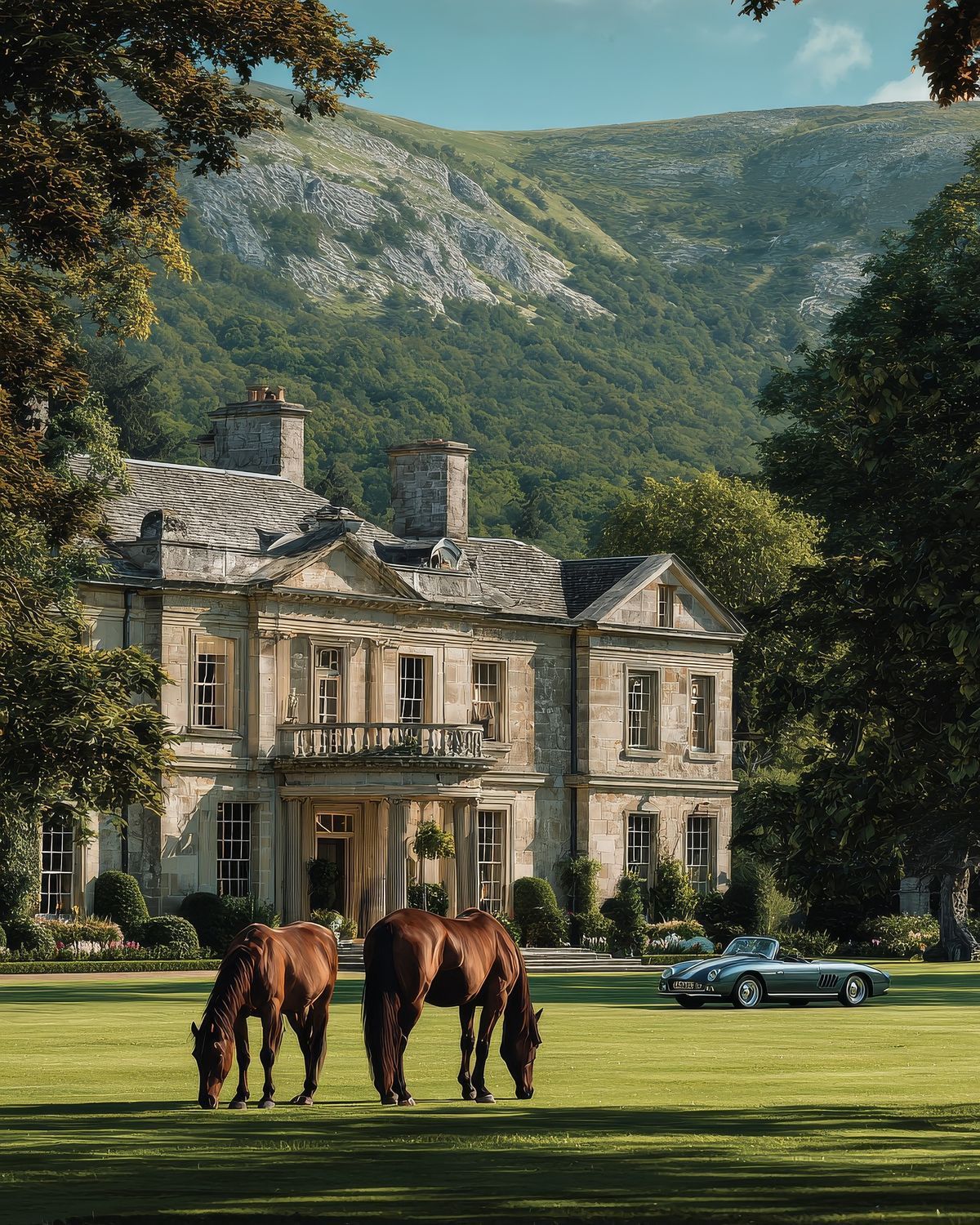
Begin at the gutter. If it fails, water reaches walls and rooms that a visitor may come to admire for very different reasons. A country house is maintained through such unglamorous connections between the visible and the concealed.
The National Trust describes the care of Ham House as seasonal work across collections, gardens and the building itself. Its example is particular, but the lesson is broad: an old house survives through repeated decisions, not through a single restoration photograph.
Maintenance is part of the design
Roofs, gutters, stone and timber answer to weather before they answer to taste. Gardens require comparable attention: paths, planting and drainage all affect the building that the landscape is meant to accompany. These tasks seldom appear in an estate portrait, yet the portrait depends on them.
Care is more thoughtful than simply making the old look new. A repair should answer a present need while respecting what remains. The traces of earlier lives can be part of a house's meaning, even as its rooms continue to serve people now.
Inside, outside, beneath
A visitor may notice a staircase, a room's light or the view across a lawn. The people caring for the place may watch a different set of details: moisture at a wall, wear on a threshold, the condition of a gutter or a plant that has outgrown its setting. These observations are connected. The admired interior and landscape depend on less conspicuous systems being understood and maintained.
At Ham House, the National Trust describes care moving between collections inside and gardens outside, following seasonal needs. Its example is specific and should not be projected onto every country house. It demonstrates a general principle: a historic place is kept through repeated work in several disciplines, not through one grand act of restoration. The people who clean, survey, repair and garden are part of its continuing story.
For a Singapore reader, the question has a local echo in conserved shophouses and terraces. They are different buildings with different histories. URA's conservation guidance nevertheless emphasises retention, sensitive restoration and careful repair. A country house abroad and a conserved building here cannot be treated as interchangeable. Both ask how inherited material can remain useful without losing the evidence of how it came to be.
Repair without erasure
Every intervention says something about what the keepers of a place value. Replacing a worn element may make a room look complete; conserving it may preserve evidence of use. Neither choice can be made responsibly from appearance alone. Condition, significance and future purpose all matter, as do the skills available to carry out the work. A house has had more than one past.
Grounds are often treated as a frame for the building. In practice they have patterns of growth, drainage, movement and care of their own. A path indicates where feet have gone; a tree changes the light on a wall; a garden may carry decisions from several generations. The view from a window is therefore a relationship between house and land, not a permanent backdrop waiting to be admired.
Keeping that relationship alive requires decisions today. Planting may need to respond to climate and maintenance capacity while respecting historical character. Rooms may need to serve people whose lives differ from those imagined by an earlier owner. A careful change can protect material history while making continued use possible. The achievement is not to erase time, but to prevent its effects from becoming neglect.
The next chapter of use
Paths show where feet actually go. Rooms take on the habits of those who use them. A landscape changes through growth, weather and the work of its keepers. These signs of life do not weaken the idea of inheritance; they make it visible.
The future of a house is decided in the next repair, the next season of gardening, the next use found for a room. A threshold kept sound under the feet that cross it tells a more convincing story of continuity than an untouched interior.
Further reading: National Trust on the care of Ham House and Garden; URA on conserved buildings in Singapore