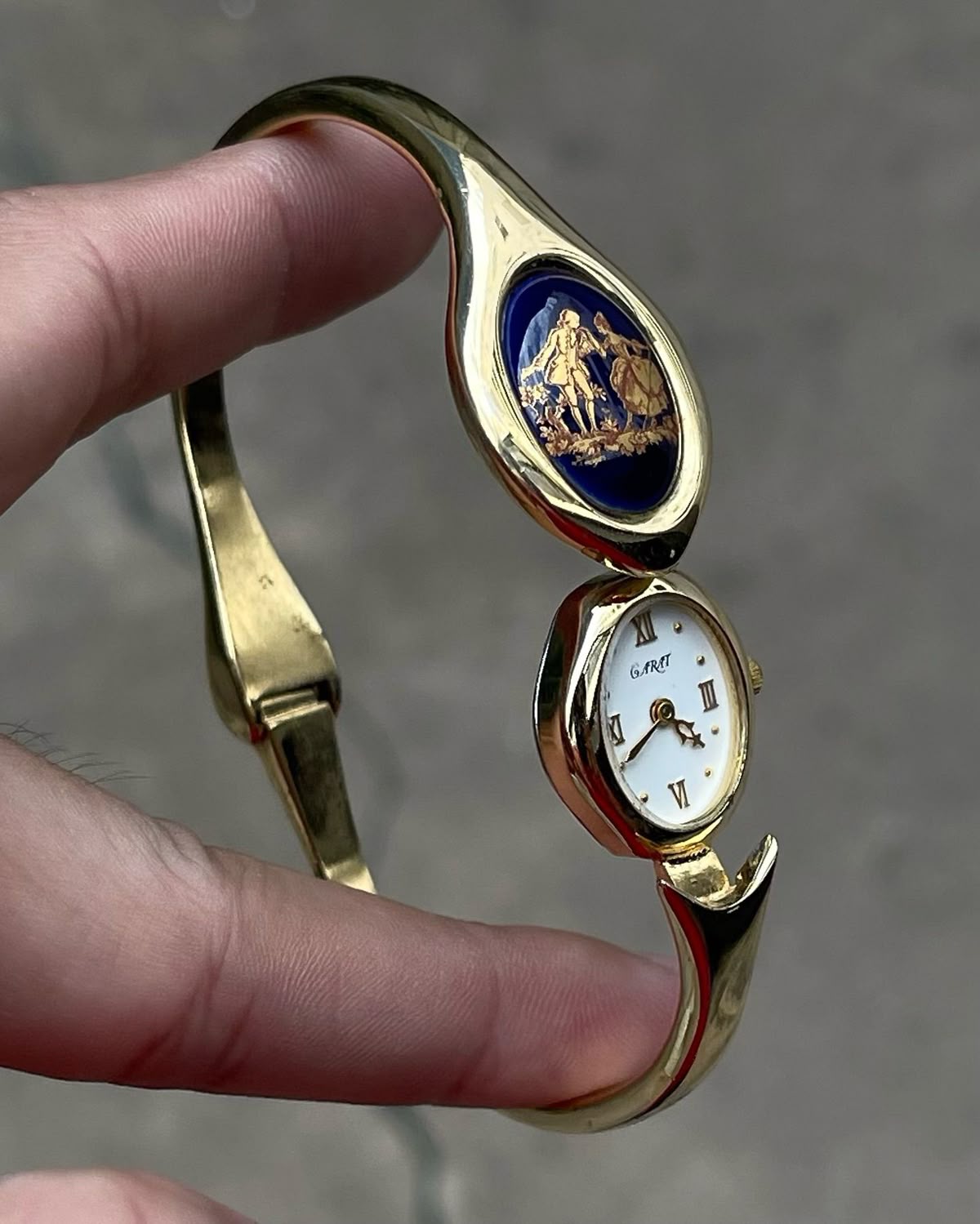
Begin with the clasp. A jewellery watch has to fasten securely, sit comfortably and let its owner read the hour. The decorative case may attract the first look, but those smaller tests decide whether the object belongs on a wrist rather than in a cabinet.
The category has deep roots. The Metropolitan Museum of Art documents watches made as precious objects by the sixteenth century. Their makers understood something still relevant: carrying time and displaying ornament are separate design jobs, and a successful piece must reconcile them.
Case, dial, clasp
The case sets the terms. It must accommodate a movement and a dial without making the bracelet feel like a watch head attached as an afterthought. Then comes the clasp: easy enough to manage, firm enough to trust. These are ordinary demands, but jewellery watches expose every compromise because the available space is so small.
Legibility is a matter of proportion. The dial should be readable when the wrist turns naturally, without asking its owner to study a miniature face under perfect light. Setting the time and maintaining the movement should also be possible without disturbing the bracelet's design. Small dimensions make these choices more exacting. A hinge can decide whether the design wears comfortably.
When watches became jewellery
The Met's account makes a useful distinction. By 1600, European watches included pieces conceived principally as jewellery and others intended to convey more information about the hour. Neither was a precise wristwatch in the modern sense. Many early dials had only an hour hand, and their owners accepted a looser answer to the question of time. The ornamental watch was therefore not an unsuccessful instrument. It belonged to a different balance of purposes, in which technical ingenuity and adornment could occupy the same small space.
The museum records a sixteenth-century design for a ring watch and an enameled gold watch associated with the Order of the Garter. These examples are historical context, not identifications of the bracelet shown here. They demonstrate how makers have repeatedly found a place for a movement inside an object carrying other meanings. To wear a watch is also to decide how publicly to show the passing hour. A concealed dial, a small opening or an emphatic face each answers that question differently.
The evidence of wear
Smallness invites inspection. Look where the bracelet meets the case, where a clasp interrupts a line and how the dial reads when the wrist turns. These observations are more revealing than an unsupported guess about maker or date. A photograph can show colour and form; it cannot establish whether a surface is solid gold, plated metal or another material. Nor can it establish the movement's condition. Those facts require documentation or examination of the actual watch.
For someone wearing the piece in Singapore, the movement between humid outdoor air and cooled rooms makes comfort and care practical questions. A secure clasp matters when the watch is worn through a full day rather than lifted out for an occasion. The precise cleaning or storage advice must follow the watch's real materials and mechanism, not its appearance in an image. A qualified watchmaker can distinguish a sign of ordinary wear from a problem that needs attention.
The signs of use can be part of an object's history without becoming a reason to neglect it. A polished surface may acquire small marks; a bracelet may settle differently with time. What matters is whether the piece can continue to be worn safely and serviced appropriately. This is the point at which jewellery and watchmaking meet again: care for the setting and care for the movement may require different hands, but both allow the same object to remain close to its wearer.
The test on the wrist
Try the piece on in daylight. Turn the wrist slowly, read the dial, work the clasp twice and ask how the movement will be serviced. Its appeal should survive that practical examination. If it does, the ornament has earned its place beside the mechanism.
Further reading: The Metropolitan Museum of Art on early jewellery watches; Meteorological Service Singapore on the local climate