A guest arrives with one hand occupied. The offer of a drink can wait until the bag is set down. This is a small decision, but it reveals the difference between following a service sequence and attending to the person entering the room.
If the drink is Champagne, the Comité Champagne gives practical guidance on serving temperature and glass shape. The knowledge matters only when it improves what the guest receives. A well-timed offer, including the freedom to decline it, does as much for a welcome as the contents of the glass.
The room before the guest
A clear route from the door, glasses ready but out of the way, someone able to answer a practical question: these are the quiet preparations for hospitality. They give a guest a place to pause and take in the room. Service begins by removing the small uncertainties of arrival.
A tray can be beautiful, but its purpose is human. It brings a gesture of welcome to someone who has just arrived. The most considerate service reads that person's pace rather than insisting on its own ceremony.
A glass at the right moment
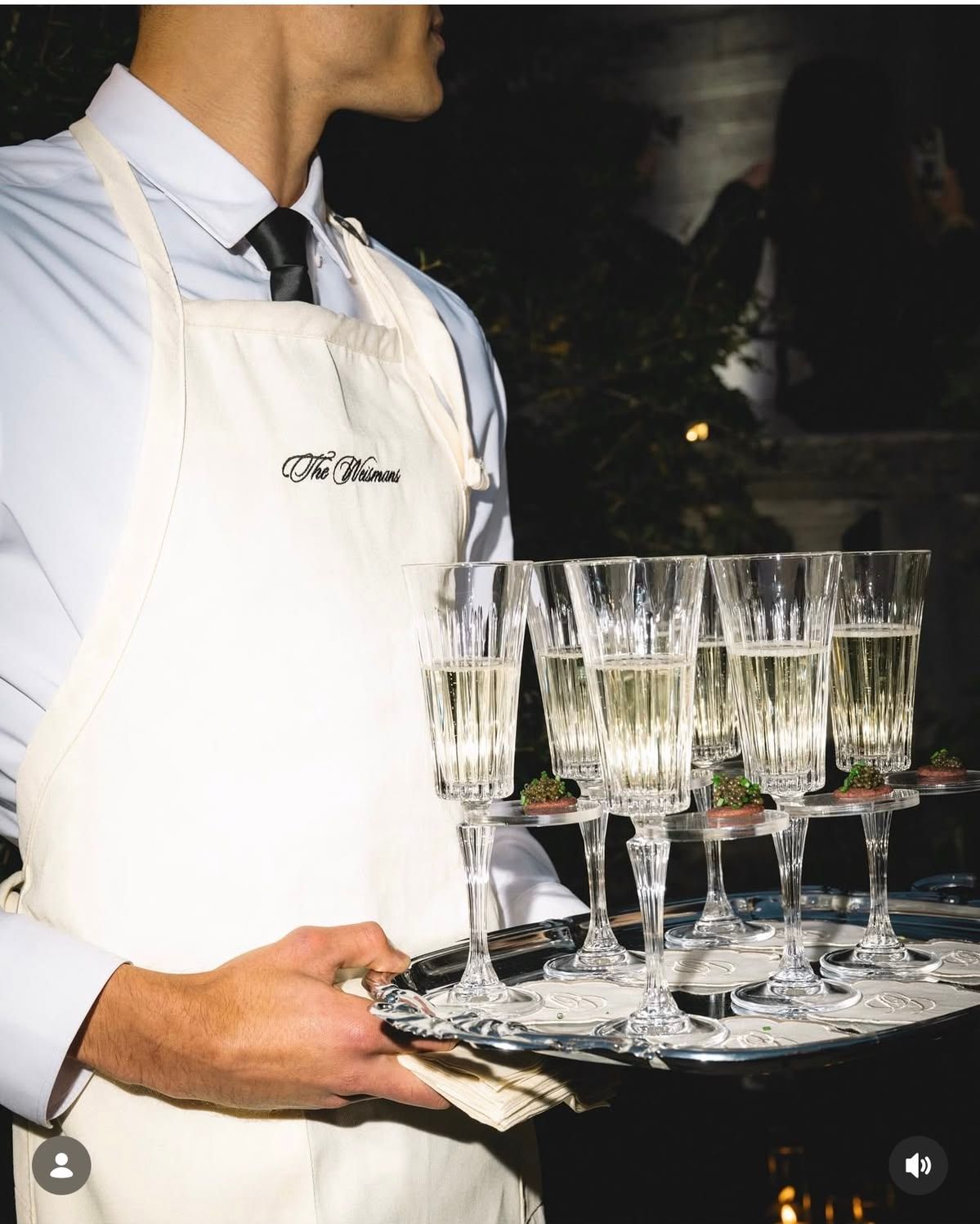
A drink offered on arrival can seem the simplest element of a gathering. If it is Champagne, the Comité Champagne's guidance gives practical substance to the gesture: a serving temperature that preserves its character and a glass shape that lets aromas develop. Such advice concerns the wine, not the identity of the drink in the photograph accompanying this article. An image of filled glasses cannot establish what is inside them. Precision begins by knowing what is actually being served.
A guest may never ask about temperature or glassware. Their experience can still be shaped by those choices. In Singapore's heat, the interval between preparation and service becomes especially noticeable for a chilled drink. The point is not to make temperature a display of connoisseurship. It is to consider what the guest receives after crossing a warm threshold. Knowledge serves hospitality when it improves the experience without becoming a lecture.
A welcome also depends on timing. A person arriving mid-conversation may want a moment to orient themselves before accepting a glass. Someone carrying a bag may need a free hand first. The same offer can feel gracious or awkward depending on when it is made. Choreography is therefore more than a memorised route across a room. It requires someone to notice the person in front of them.
Make a refusal easy
A good welcome makes declining easy. Hospitality should not turn an invitation into an obligation. Water or another option may be more welcome, and some guests may prefer nothing at all. A server who accepts that answer without drawing attention to it preserves the comfort the gesture was meant to create. This discretion is a form of care, not a withdrawal of it.
The host's work is to think ahead enough that guests can choose how to inhabit the occasion. After that, the room needs space to find its own rhythm. Constant intervention can make people feel managed rather than welcomed, however polished each intervention may appear.
The most accomplished service leaves the guest aware of being cared for without having to study the mechanism of care. The person offering it remains present and attentive, not invisible as a human being. What fades from view is friction between one moment and the next. The glass is only one part of that achievement; the occasion had room for its guest.
A guest who feels noticed does not need to be constantly attended to. A warm beginning makes space for conversation to develop naturally, for a refusal to be accepted easily and for the next offer to come at the right moment.
Later, nobody needs to remember the path of the tray. They may remember that their hands were free when they needed them, that a refusal was accepted and that the room felt easy to enter. Those are the traces of attention, not a performance of it.
Further reading: Comité Champagne on serving Champagne; Meteorological Service Singapore on the local climate