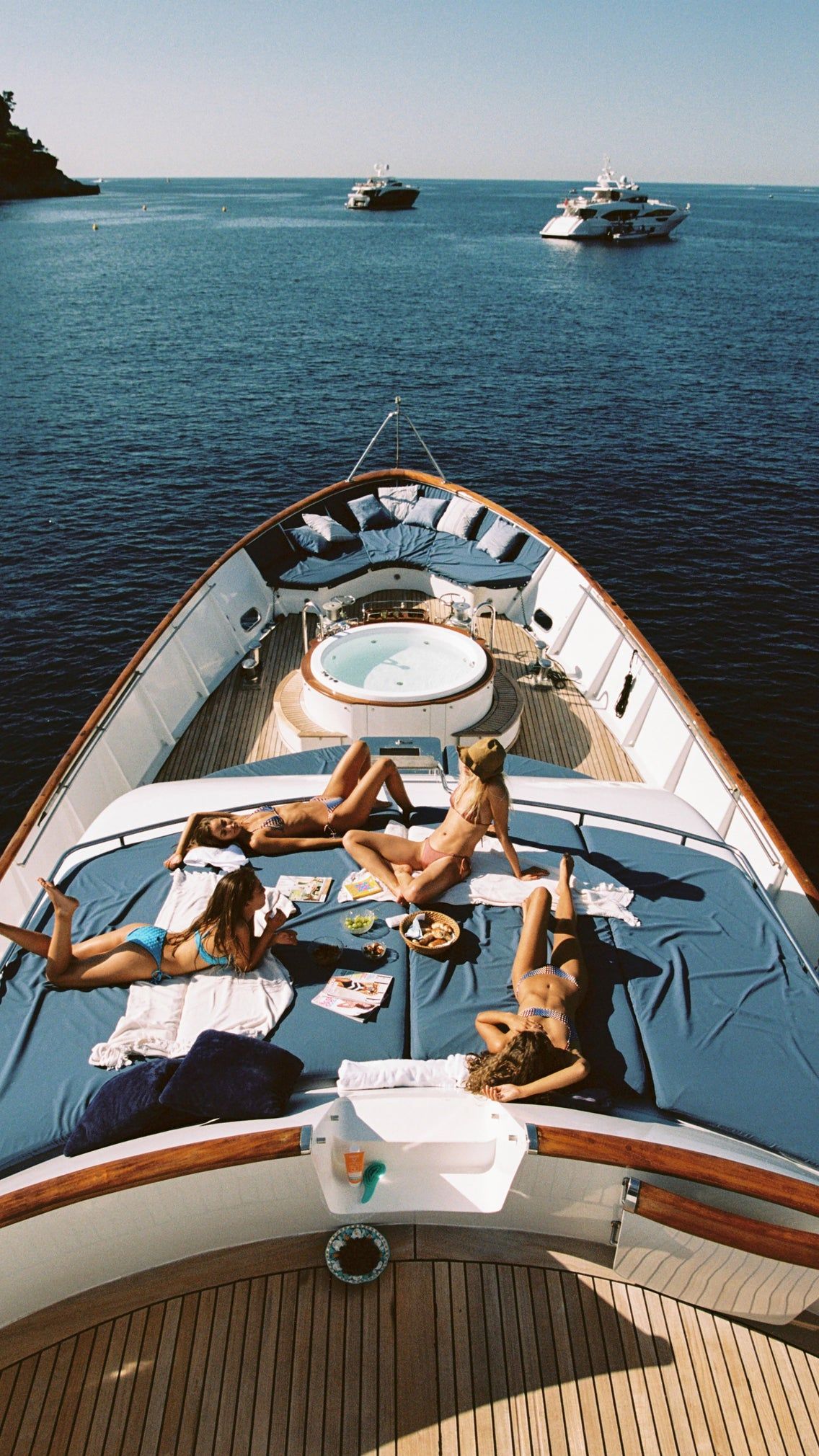
Draw a route across the deck before choosing the best seat. Someone will have to pass between that seat and the rail, carry a glass from the cabin and find a handhold when the boat moves. A plan that looks open on paper can feel obstructed at sea.
The Royal Yachting Association's guidance on safe movement aboard places support and deliberate footing ahead of the view. That practical priority improves the space as well as its safety. People settle more easily where moving around does not demand their full attention.
Start with the route
A deck is circulation space as well as a place to linger. Watch where the path narrows, where a step interrupts it and where a person can steady themselves. Furniture should give company a place to gather without turning every trip across the boat into a negotiation. The most handsome seat is little use if reaching it feels uncertain.
The Royal Yachting Association's safety guidance stresses considered movement on deck and suitable points of support in exposed conditions. The wider design lesson is straightforward: the details that let people move with confidence also allow them to relax.
A surface that moves
A deck changes character with the state of the water. A path that feels broad alongside a dock can ask more of a person once the vessel moves. Seats, steps and open areas must be considered as parts of a route, not only as elements of a composition. A space serene in a photograph may tell another story when someone carries a glass across it or reaches for support.
Weather on deck
The RYA's advice on moving safely on deck is especially relevant in exposed conditions, where a secure connection to the boat can matter greatly. It can ask a useful design question: does the arrangement recognise that people will need to move as well as sit?
In Singapore waters, the Maritime and Port Authority advises pleasure craft users to check weather and tidal conditions before heading out. That context belongs beside any serene deck photograph. Heat, rain and changing sea conditions can alter how an outdoor space is used. Shade and secure movement are not interruptions to the pleasure of the view; they help make it possible to remain there.
Shade, grip, maintenance
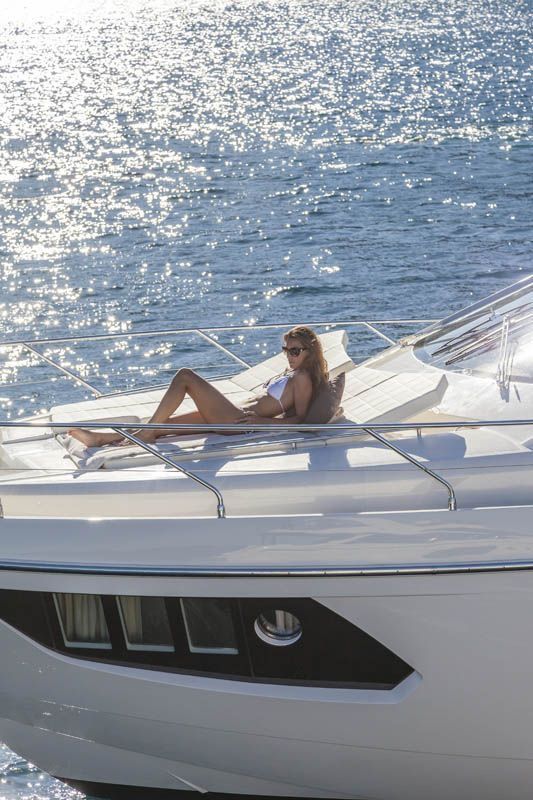
The sun does not hold one position all afternoon, and neither does a boat. A seat inviting at the start of a passage may become difficult to occupy later. Shade may be architectural, temporary or simply a matter of where people choose to settle. What matters is the ability to change position without losing access to the view or to one another. Good use is revealed over time, not in one perfect moment.
Outdoor surfaces also live with sun, water and repeated contact. Their appearance on the day of delivery is only the beginning of their story. A material should be understood through the care it requires and the way it behaves underfoot and against skin in changing conditions. No photograph can establish these qualities conclusively; they must be tested and maintained in use.
A surface that can be looked after, a fitting that can be reached for repair and a seat where people can settle without anxiety may offer more lasting pleasure than a spectacular detail that frustrates ordinary use. This is where the idea of luxury becomes practical. The best decisions often become visible only after many afternoons aboard, when the arrangement still works for the people living with it.
The seat people choose
Once the practical questions have been answered, the deck can become wonderfully unprogrammed. Someone reads quietly nearby. Others talk without facing one another across a formal table. A view offers enough change to hold attention without asking anything in return.
The arrangement succeeds over several hours, not in the instant of a photograph. Light shifts, the vessel turns, a different person takes the seat. The deck has done its job when the route still works and people keep coming back to the view.
Further reading: Royal Yachting Association guidance on moving safely on deck; MPA Singapore on safety at sea