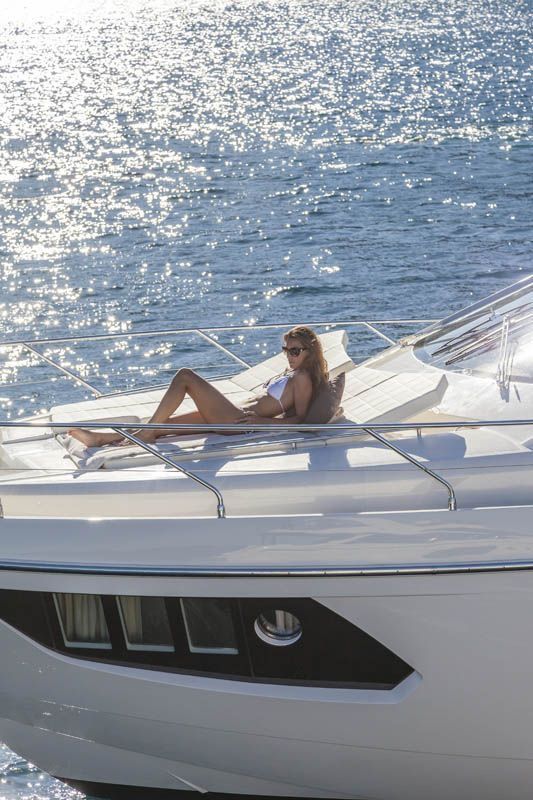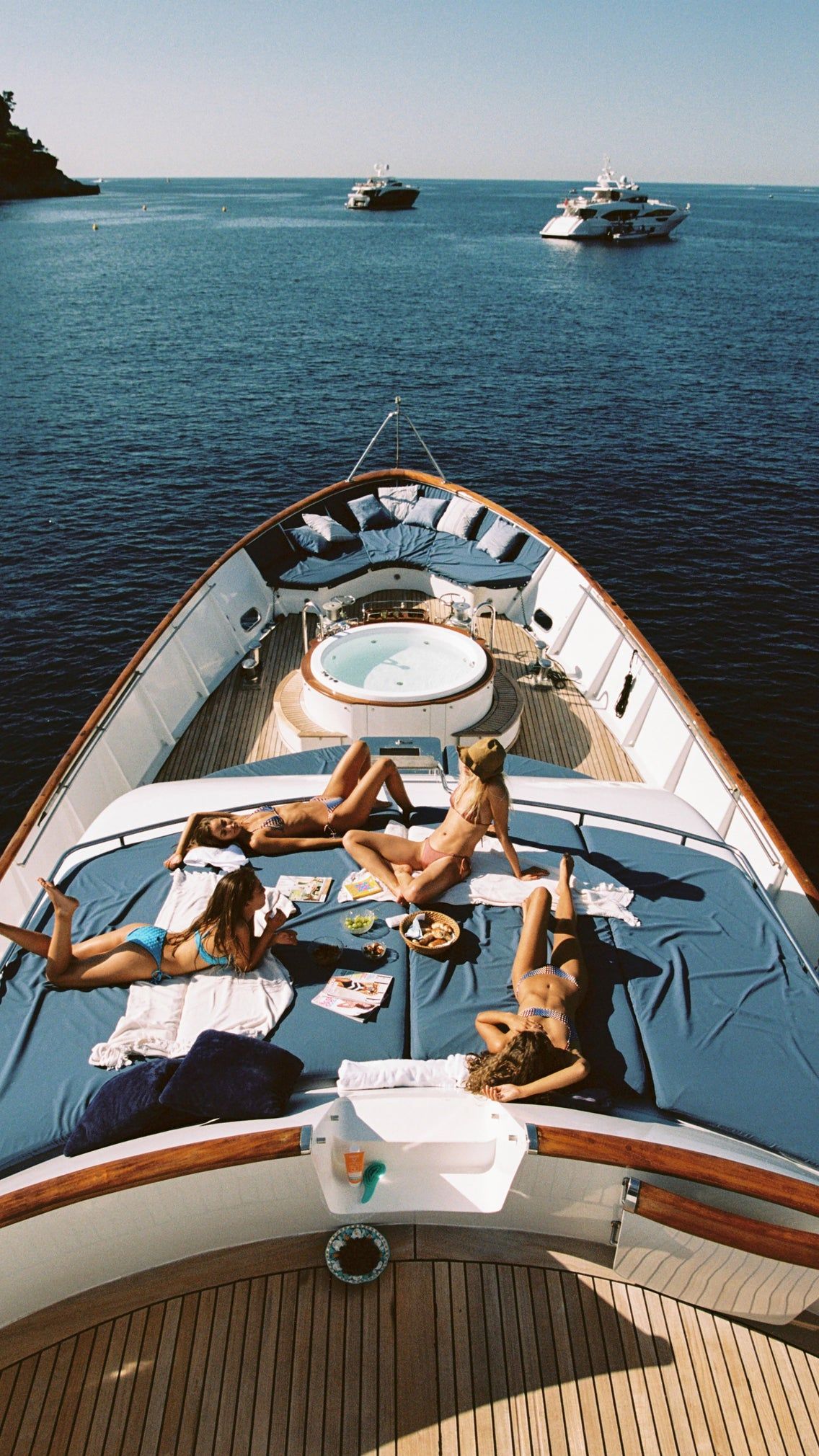
One person follows the coastline. Another stays at the table after lunch. Someone opens a book, then puts it down when a conversation starts nearby. A voyage gathers these different speeds without asking the group to agree on one way of spending the day.
The boat's layout has a part in that freedom. Seats, sightlines and clear passages determine whether company can form and disperse naturally. Measurements describe the vessel; the movement of people explains how it is lived in.
A table and its orbit
The table gives a group an address. A seat a few steps away lets a conversation continue after the meal; another, farther off, permits a private thought. A clear path between them lets people change their minds without interrupting everyone else. That ordinary freedom can matter more than a room arranged for a single perfect gathering.
The best gathering places accommodate different kinds of attention. Some people watch the horizon while they speak. Others listen from the edge before joining in. A useful deck does not force intimacy; it gives people a choice of how to take part.
Different speeds aboard
Time aboard is rarely one continuous activity. People arrive with different expectations and energies. One wants to follow the coast; another settles into conversation; a third prefers a book. The journey becomes comfortable when none of these responses is treated as a refusal to participate. The sea may be shared, while each person attends to it differently.
Meals and changes of view provide natural points of reunion. People return with something noticed separately: a detail onshore, a shift in weather, a memory prompted by the place. The route gives conversation material but cannot manufacture the conversation itself. This is why a tightly planned itinerary can sometimes feel thinner than an afternoon with room for a detour or an unhurried second cup at the table.
On Singapore waters, that apparent ease sits beside a working maritime setting. The Maritime and Port Authority asks pleasure craft operators to remain alert to weather and other vessels. Those responsibilities belong to the people running the boat, yet they shape the guests' experience. The freedom to talk, look outward or withdraw for a while depends on a passage conducted with care. It should never require pretending the surrounding water is an empty stage.
Space for company and solitude
The arrangement of seats influences who can hear whom, who feels part of a group and who can leave without making a scene. A table that dominates every space may make gathering easy but solitude awkward. A series of isolated lounges may do the reverse. A considered layout offers several ways to occupy the same journey, allowing people to move between company and quiet without announcing the change.
A shaded seat near the centre of activity offers a different kind of privacy from a space entirely apart. Such choices do not determine whether a group will get along. They remove needless friction, leaving more room for the relationships already present. Space can encourage attentiveness; it cannot substitute for it.
Images of a social voyage tend to show guests. The experience also depends on people whose work may not appear in the frame: those responsible for navigation, preparation, service and care of the vessel. Their tasks should not be turned into a sentimental backdrop. They are skilled work with practical demands. A relaxed afternoon is made by that competence, the arrangement of space and the choices of the guests.
Company also needs intervals. A place to read or sit alone for a while can make time together more enjoyable later. Privacy here need not mean a closed door. Sometimes it is simply a seat with a view and enough distance for a thought to finish.
By evening, the route may be less vivid than the way the group moved through it: together at the table, apart for a while, together again when the light changed. Space made those choices easy. The people gave them meaning.
Further reading: MPA Singapore pleasure craft safety guide